
How To Trim an Oil Lamp Wick: Step-by-Step Guide

How To Trim an Oil Lamp Wick is one of the most important yet often overlooked steps in maintaining an oil lamp. A properly trimmed wick ensures a clean, steady flame, while a poorly maintained wick can lead to smoke, uneven burning, and reduced brightness.
Whether you’re using a hurricane lamp for emergencies or a decorative oil lamp at home, knowing how to trim the wick correctly can significantly improve performance.
With just a few simple techniques, you can extend the life of your wick and get the best possible light output from your lamp.
Should You Trim An Oil Lamp Wick?
Yes, you should trim an oil lamp wick regularly to maintain optimal performance. Over time, the wick becomes charred and uneven, which can cause flickering flames and excessive smoke.
Trimming removes the burnt carbon buildup and restores a clean burning surface, allowing the flame to burn brighter and more efficiently. Regular maintenance also helps prevent soot buildup on the chimney, keeping your lamp cleaner and safer to use.
What Can I Trim A Wick With?
You don’t need specialized tools to trim an oil lamp wick. Some common options include:
- Scissors – The most accessible and effective tool
- Wick trimmer – Designed specifically for clean, curved cuts
- Nail clippers – Useful for small adjustments
- Knife or blade – Works in emergencies but requires caution
While a wick trimmer provides the best precision, regular scissors are perfectly fine for most users.
How To Properly Trim A Wick?
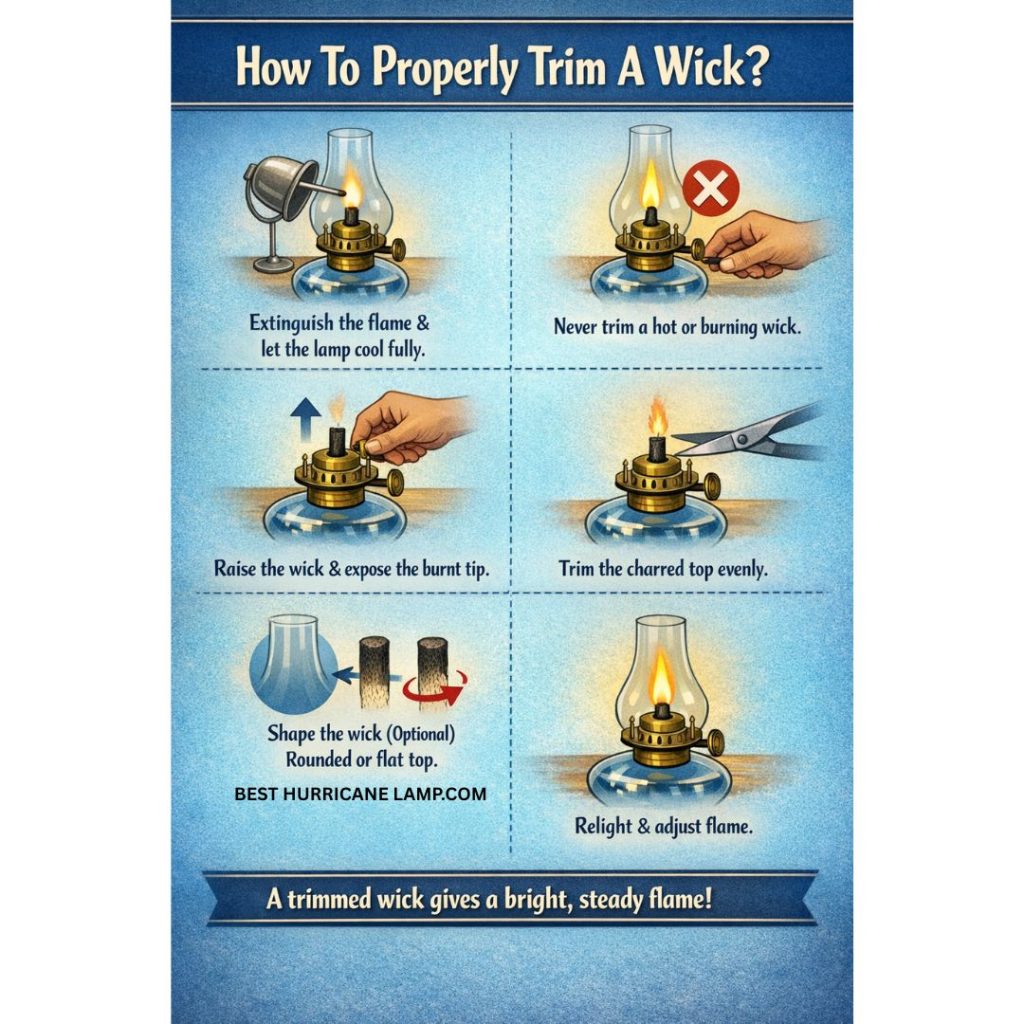
Trimming a wick correctly is simple, but technique matters. Follow these steps for the best results:
- Extinguish the flame and let the lamp cool completely
- Never attempt to trim a hot or burning wick
- Raise the wick slightly
- Use the adjustment knob to expose the burnt portion
- Trim the charred top evenly
- Cut off the blackened part to create a smooth edge
- Shape the wick (optional)
- A slightly rounded or flat top helps produce a steady flame
- Lower and relight the wick
- Adjust the flame height for a clean, smoke-free burn
Source: AI Generated
A properly trimmed wick should produce a bright, steady flame without flickering or soot.
How Do You Trim A Wick Without A Wick Trimmer?
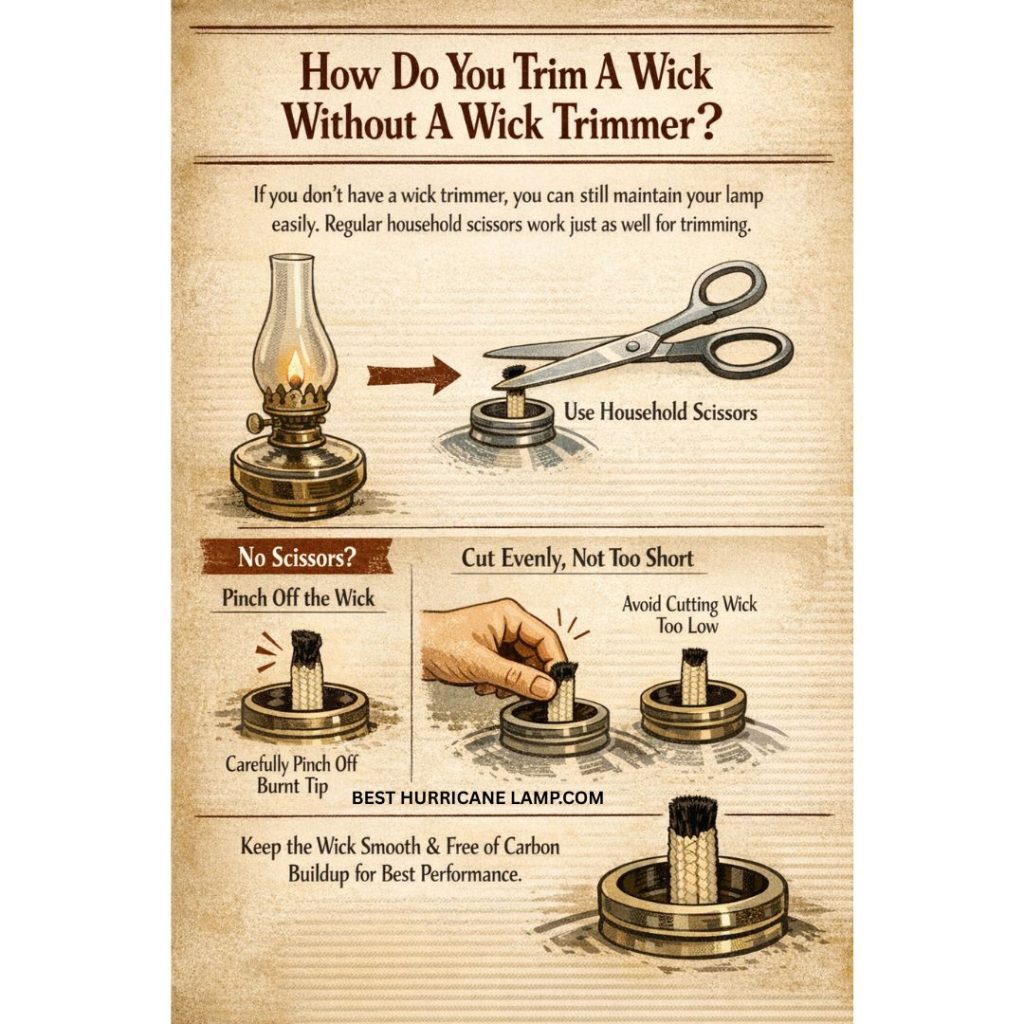
If you don’t have a wick trimmer, you can still maintain your lamp easily. Regular household scissors work just as well for trimming.
Make sure to cut the wick evenly and not too short, as trimming too much can reduce the lamp’s ability to draw fuel. If scissors aren’t available, you can carefully pinch off the burnt part with your fingers once the wick has cooled, though this method is less precise.
The key is to ensure the wick remains smooth, even, and free of carbon buildup for consistent performance.
Source: AI Generated
Conclusion
Trimming an oil lamp wick is a simple yet essential practice that directly impacts how well your lamp performs. A clean, evenly trimmed wick ensures brighter light, less smoke, and a longer-lasting lamp.
By using basic tools and following proper trimming techniques, you can keep your oil lamp running efficiently for years. Whether for emergencies or ambiance, a well-maintained wick makes all the difference in creating a reliable and steady source of light.
Read: What is the best chimney height for an oil lamp

Colton Reeves is a dedicated writer for Best Hurricane Lamp, where he brings a unique perspective to his storytelling. When he isn’t crafting engaging content for the web, you can usually find him on the court indulging in his passion for basketball.