How To Make an Oil Lamp at Home (Step-by-Step Guide for Beginners)
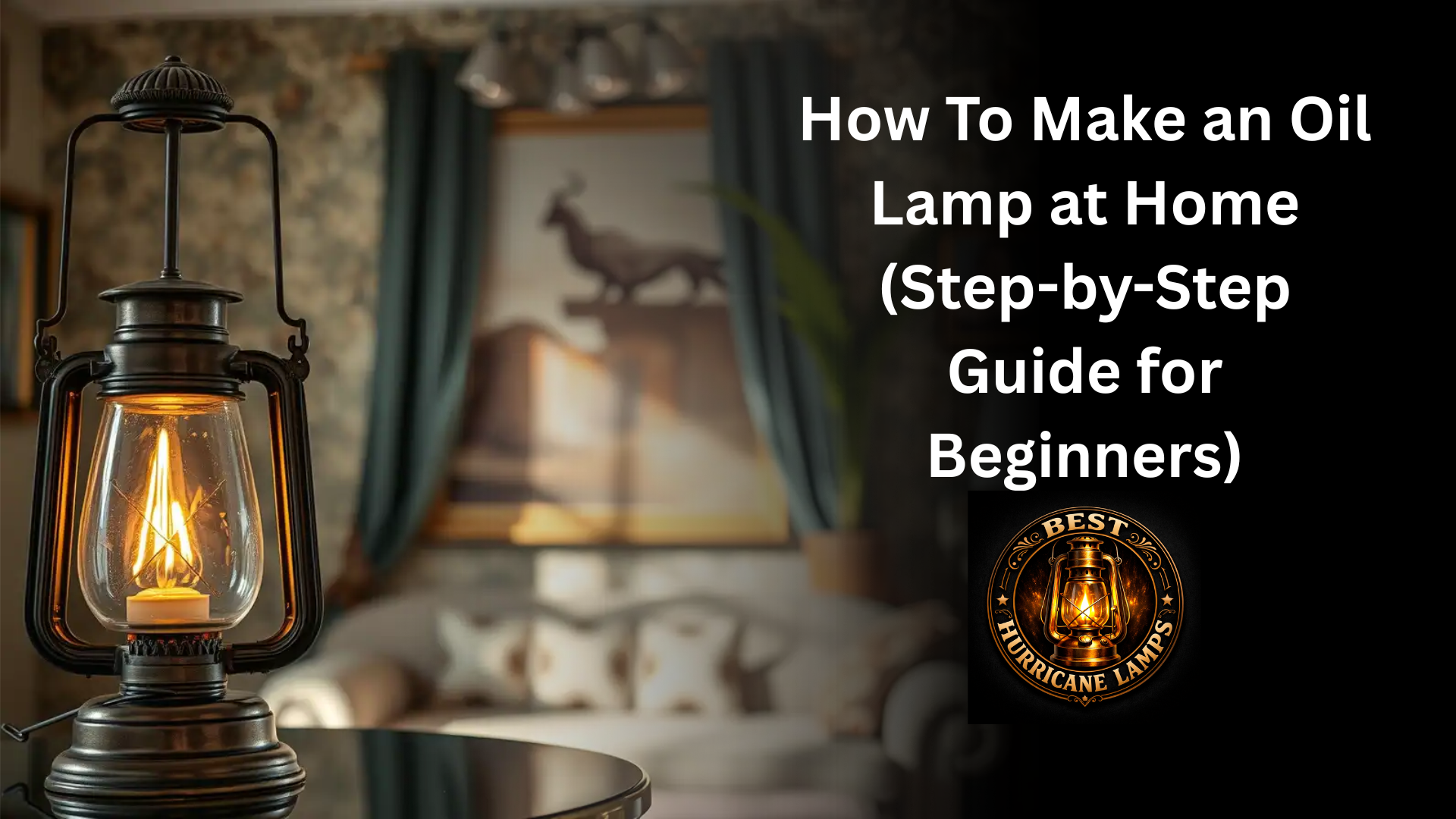
How To Make an Oil Lamp is a question many people ask when looking for a simple, reliable light source during power outages or for DIY projects. The good news is that making an oil lamp at home is surprisingly easy and requires only a few basic materials.
Whether you want a functional emergency light or a decorative vintage-style lamp, a DIY oil lamp can be both practical and cost-effective. With the right setup and fuel, you can create a long-lasting light source that works without electricity.
Can You Make Your Own Oil Lamp?
Yes, you can easily make your own oil lamp using simple household items. In fact, DIY oil lamps have been used for centuries as a basic lighting solution.
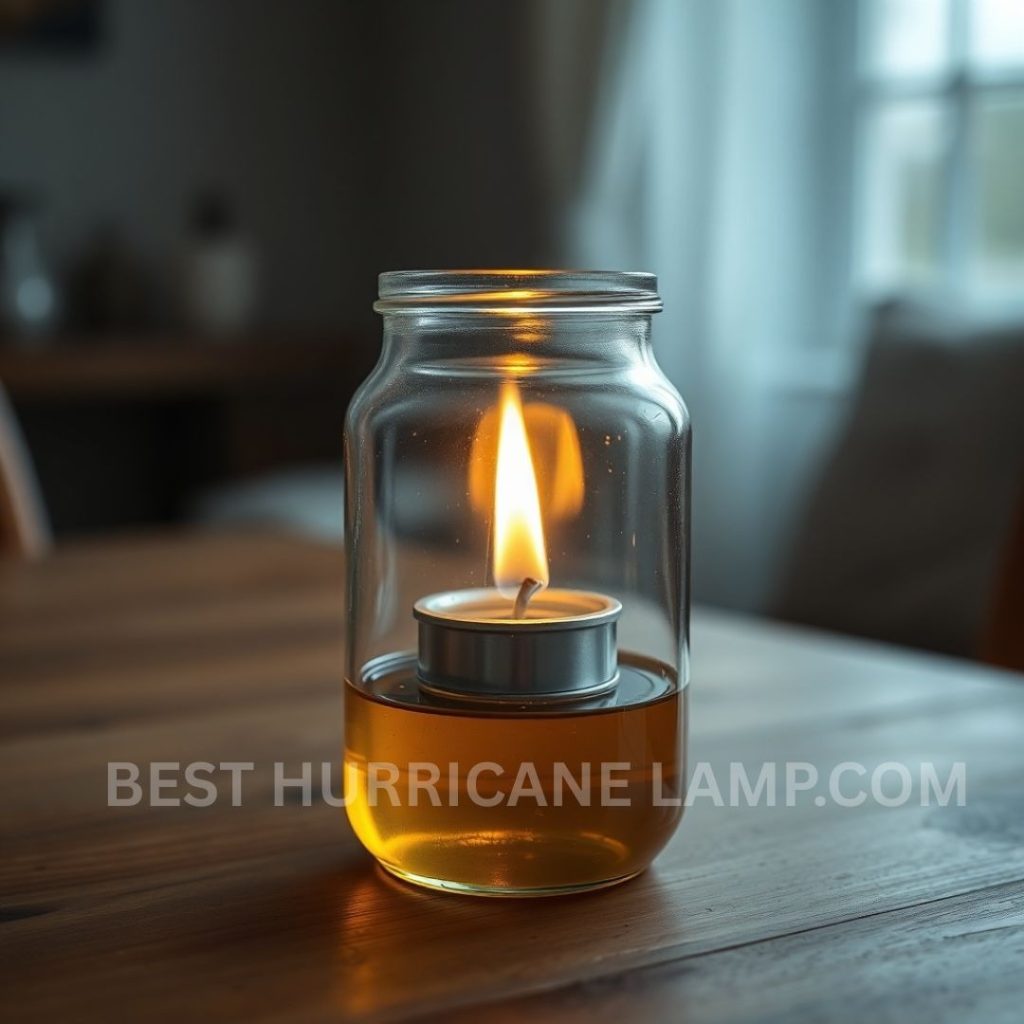
All you need is a container (like a glass jar), a wick, and suitable oil. With proper setup, your homemade oil lamp can provide steady light for hours, making it useful for emergencies or outdoor use.
Source: AI-Generated
How Is An Oil Lamp Made?
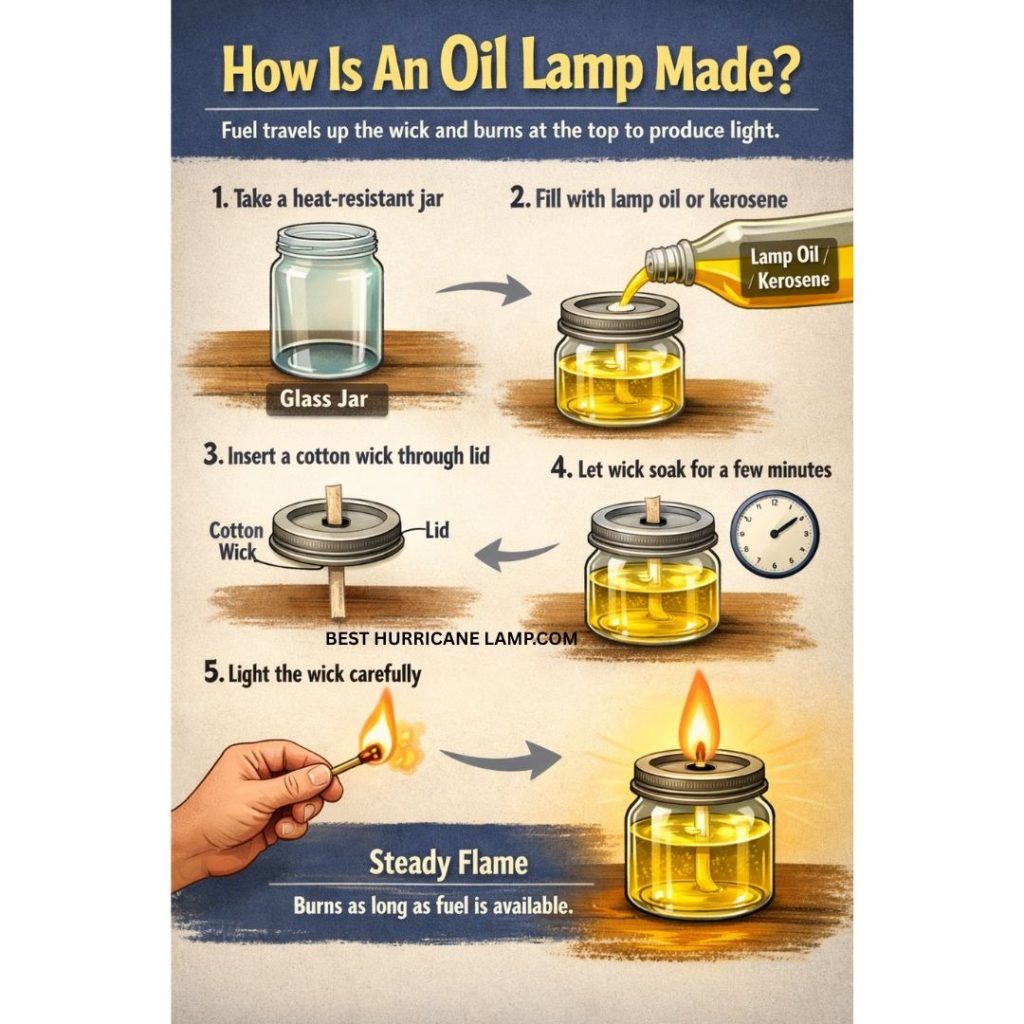
An oil lamp works on a very simple principle: fuel travels up the wick and burns at the top to produce light. Here’s how you can make one:
- Take a heat-resistant container like a glass jar
- Fill it with lamp oil or kerosene
- Insert a cotton wick through a lid or holder
- Let the wick soak in oil for a few minutes
- Light the top of the wick carefully
- Once lit, the lamp will produce a steady flame as long as fuel is available.
Source: AI Generated
What Kind Of Oil To Use For An Oil Lamp?
Choosing the right oil is important for safety and performance. The best options include:
- Lamp Oil – Clean-burning and low odor (best for indoor use)
- Kerosene (Paraffin Oil) – Brighter light but may produce slight smell
- Vegetable Oil – Works in DIY lamps but gives lower brightness
Avoid using fuels like gasoline or alcohol, as they can be dangerous and unstable.
How To Prepare An Oil Lamp?
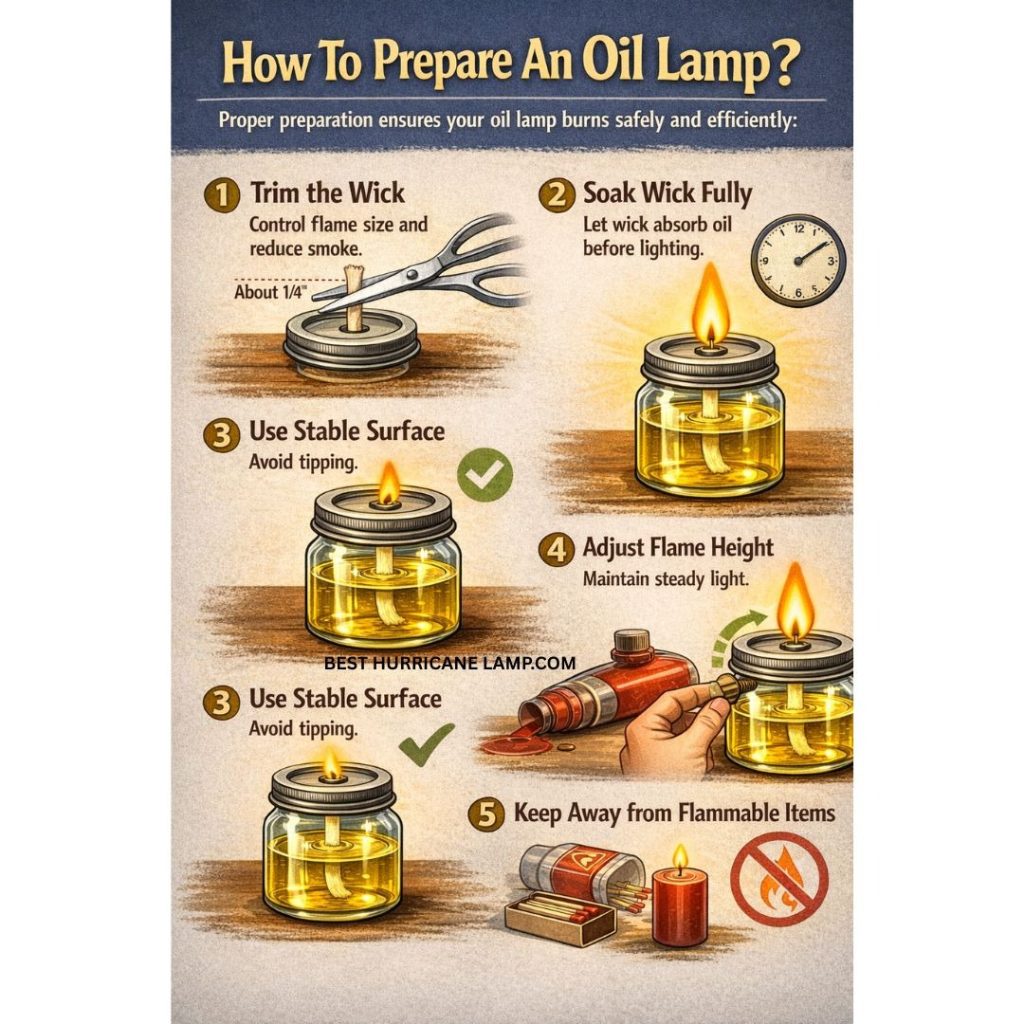
Proper preparation ensures your oil lamp burns safely and efficiently:
- Trim the wick to control flame size and reduce smoke
- Let the wick soak fully before lighting
- Use a stable surface to avoid tipping
- Adjust the flame height to maintain steady light
- Keep away from flammable materials
Source: AI Generated
These simple steps help improve burn time, brightness, and overall safety.
Conclusion
Making your own oil lamp is a simple and practical skill that can be useful in many situations from power outages to outdoor activities. With just a few materials, you can create a reliable light source that doesn’t depend on electricity.
By understanding the right fuel, setup process, and safety precautions, you can ensure your DIY oil lamp works efficiently and safely. Whether for emergency preparedness or aesthetic use, an oil lamp remains a timeless and dependable solution.
Read: What is an oil lamp

Colton Reeves is a dedicated writer for Best Hurricane Lamp, where he brings a unique perspective to his storytelling. When he isn’t crafting engaging content for the web, you can usually find him on the court indulging in his passion for basketball.